Plants
The information on this site is for educational purposes only and is not medical advice.
“Plants have been part of human life for longer than we have had words for them.”
Plant medicines sit where culture, history, science and nature meet. They have been held in ceremony for thousands of years, and the science is only beginning to ask the right questions. The Plants Talk follows those questions without hype, through four lenses: their roots in tradition, what they do in the body and brain, how people make sense of the experience, and the context of law, care and ethics.
Questions Plants asks
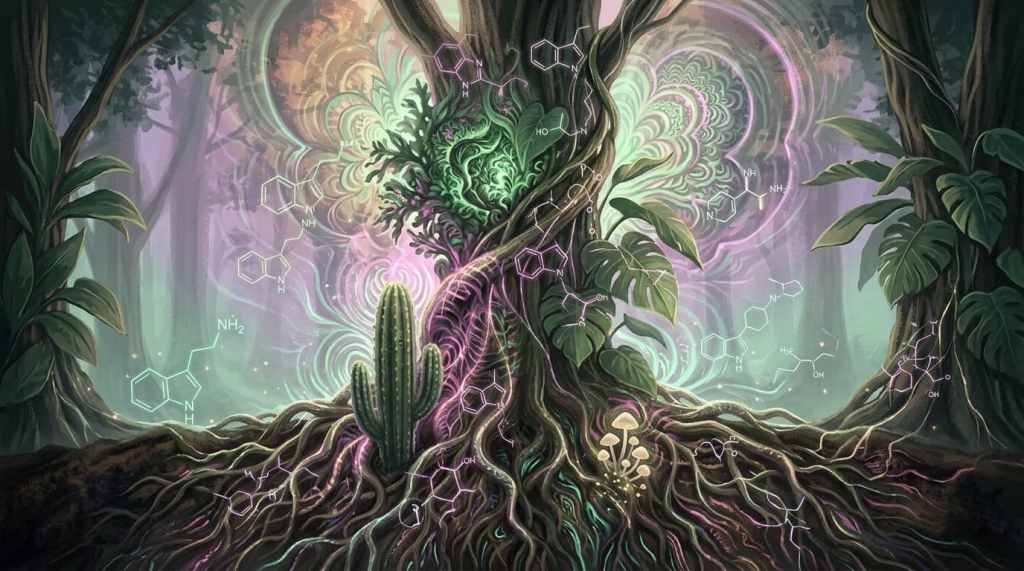
- Ayahuasca depends on two plants: one that carries the molecule, and one that lets it survive digestion and act. How did people with no laboratories find that pairing among thousands of species?
- Is the effect carried by a single compound, or by a cocktail of compounds that science has not yet fully deciphered?
- Is the experience in the plant, in the person, or in the space between them, and how would you ever test that?
- If the brain builds our reality as a best guess, what happens when a plant loosens its grip, and who is left watching?
- Communities held these practices for generations, with rules, roles and preparation. What did they understand about context that clinical trials are only beginning to measure?
- Who owns a plant’s knowledge, and why does the law treat a plant, its molecule and a ceremony so differently?
Each question opens onto the others. Start with whichever one pulls at you.
Why Plants matters
Plant medicines are usually discussed in extremes, from sweeping promises to blanket dismissal. The more interesting story sits between them, and most of it is unresolved.
Take ayahuasca: a vine that lets a molecule survive digestion, and a leaf that supplies it. Neither works alone. Behind that pairing sits a second puzzle, whether an effect belongs to one compound or to a mixture science has yet to decode. And behind both sits a third: whether the experience lives in the plant, in the person, or in the space between them.
Studies, case reports and personal accounts describe meaningful benefits for many people and difficulties for some. Both belong in an honest account. Plants sits beside Mind, Brain and Roots and draws on all three. It reports research, not promises.
Societies that already do this
Imagine a society where these practices are held openly. In places, that is not hypothetical. Indigenous peoples across the Amazon and the Andes have held them for generations, Brazilian churches use ayahuasca with legal recognition, and Peru has declared Indigenous ayahuasca use part of its national cultural heritage. Researchers are beginning to study these communities, and the findings keep pointing back to community and context.
What this section is for
Each page below is an introduction, not the whole story. The detail lives in the articles and videos. Read in any order, and follow the links to Mind, Brain and Roots wherever a thread leads. Where the evidence is early, mixed or contested, we say so.
These pages do not give instructions, dosing or sourcing, and they make no claims about treatment. Adults make their own decisions, and our aim is to help you make them with good information.
Six ways into Plants
Pick whichever draws you in.
Ayahuasca
Psilocybin
San Pedro
Peyote
Rapé
Law, care and ethics
Not sure where to start?
- Fascinated by a brew that needs two plants → Ayahuasca
- Curious whether one molecule explains a mushroom → Psilocybin
- Drawn to the Andean cactus with deep ceremonial roots → San Pedro
- Want to know why a sacred cactus needs protecting → Peyote
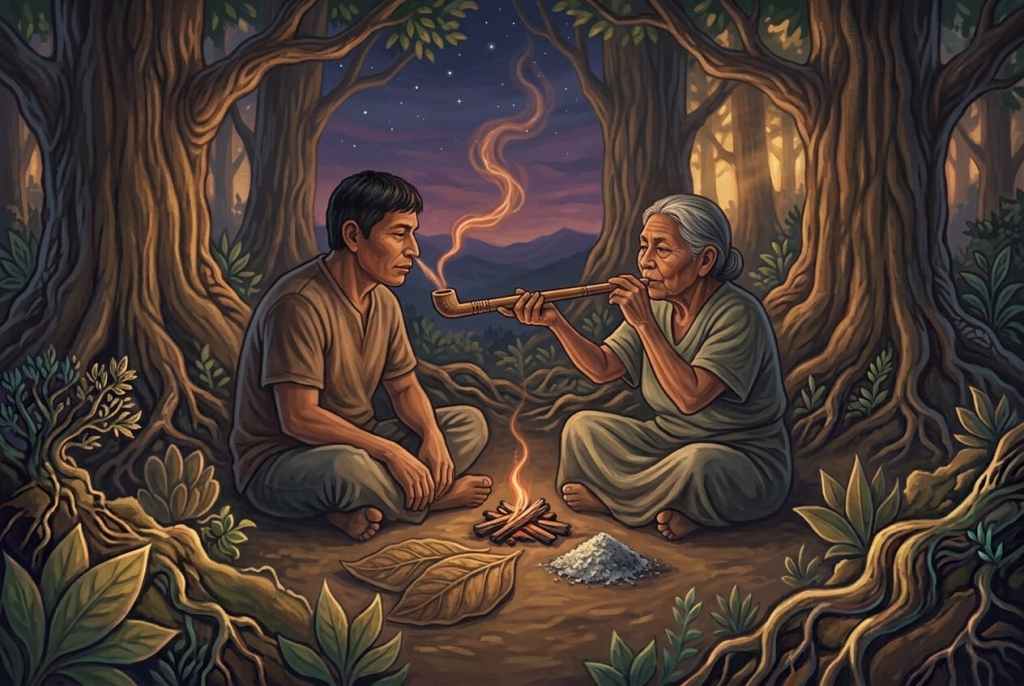
- Curious about an Amazonian ritual few outsiders understand → Rapé
- Want the bigger picture: law, care and whose traditions these are → Law, care and ethics
Laws differ from country to country, and you are responsible for knowing the law where you live or travel, and for your own decisions. We do not sell, post or supply plant medicines. If you are struggling, or have questions about your health, speak to a therapist or your doctor.
The Plants Talk also offers retreats and 1-2-1 sessions with partners where this is legal or permitted. These pages are written to inform, not to sell.