Brain

“Underneath every thought, there is a body quietly doing its work.”
Every thought, mood and craving has a physical signature: receptor binding, synaptic transmission, shifting network dynamics. The challenge is reading that signature without reducing a life to a scan.
This is where The Plants Talk looks beneath the surface: the molecular and systems-level science behind experience, how plant compounds act on it, and what the research does and does not show.
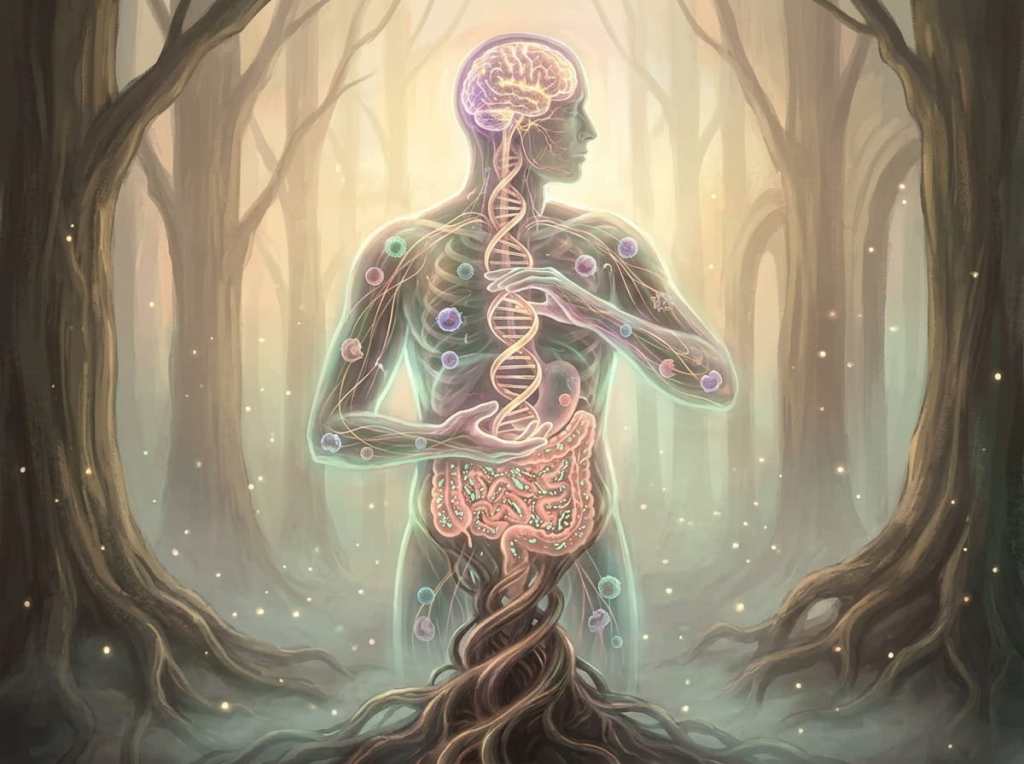
The brain is not the whole story. It works in constant dialogue with the gut, the immune system, the endocrine and stress axes, and the genome and how it is expressed. Brain looks at the biology of that whole connected system, not the brain alone.
Questions Brain asks
- How do the serotonergic, dopaminergic, glutamatergic, GABAergic, opioid and endocannabinoid systems work together, and where do psychedelics act across them?
- How do synaptic plasticity, neurogenesis and new neural pathways shape what can change?
- How do the HPA axis and the autonomic nervous system set the body’s response to stress?
- How are memories consolidated and reconsolidated, and how are patterns stored and revised?
- What do the default mode network and predictive processing say about how the brain builds experience?
- How do the gut, the immune system, genes and epigenetics connect to the brain?
Each question opens onto the others. Start with whichever one pulls at you.
Why Brain matters
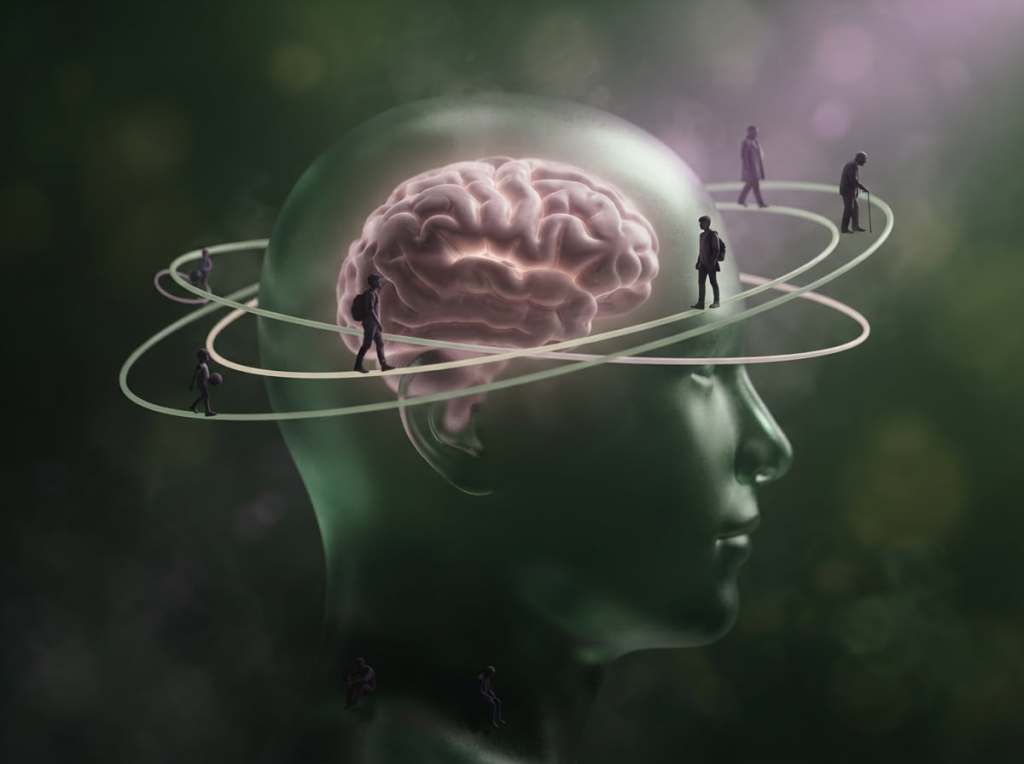
Understanding the mechanism changes how we see the experience. The brain is a plastic system, not a fixed circuit: patterns of activity are laid down, reinforced and revised over time, and that is as true of habit as of insight.
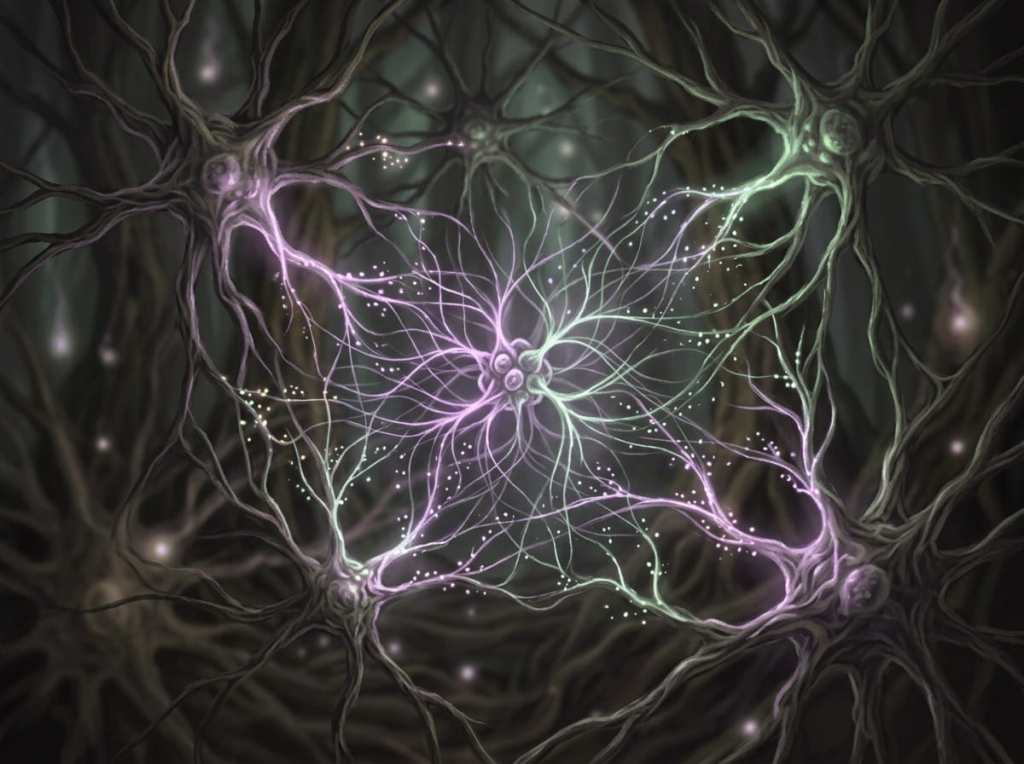
Synaptic plasticity, the activity-dependent strengthening and weakening of synapses, is how new neural pathways form: neurons that fire together tend to wire together. Neurogenesis, the birth of new neurons, is one of the field’s live debates, particularly how far adult hippocampal neurogenesis extends in humans.
Brain sits between Mind and Plants. It links lived experience with its neurobiology and the wider biology of the body, and shows where plant compounds enter that picture. It reports research, not promises.
What this section is for
Brain gives you the bird’s-eye view of the science. Each page below is an introduction, not the whole story. The detail lives in the articles and videos. Read in any order, and follow the links to Mind, Roots and Plants wherever a thread leads. Where the evidence is early, mixed or contested, we say so.
The vocabulary is the field’s own: receptor pharmacology, serotonergic and dopaminergic signalling, endogenous opioids and endocannabinoids, the default mode network, predictive processing, neuroplasticity, the gut-brain axis. Terms are used precisely and explained in context, not defined from scratch.
Six ways into the Brain
Pick whichever draws you in.

Signalling systems and receptors
Plasticity and neurogenesis

Stress and the nervous system

Memory and learning

The default mode network
The connected body
Not sure where to start?
- Want to know how the brain’s chemical systems work together → Signalling systems and receptors
- Wondering how the brain changes over time → Plasticity and neurogenesis
- Curious how the body handles stress → Stress and the nervous system
- Interested in how patterns are stored and revised → Memory and learning
- Fascinated by how the brain builds experience → The default mode network
- Want to see how the whole body connects → The connected body