
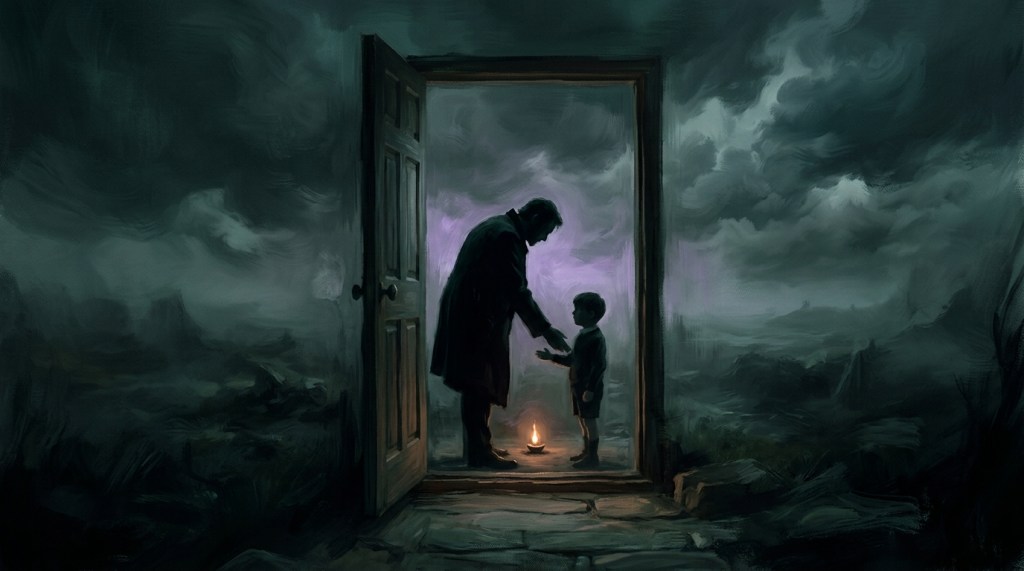
What our fathers gave us, what they couldn’t, and what we pass on.
You can leave home and still carry it with you.
Most men can tell you what their father did for a living. Far fewer can tell you what it was like to be near him: whether he was warm or cold, whether you were safe when he walked in, whether he ever said he was proud of you, or that he loved you. Those answers shape a great deal of how we work, love, connect, fight and stay silent.
Does this sound familiar?
- You can’t remember him saying “I’m proud of you.”
- You hear his voice in yours, and you don’t like it.
- If someone asked what your dad was like, you’d struggle to answer.
- You go quiet when things get tense, the way he did.
- A boss’s approval matters more than it should.
- You’re always trying to earn a place nobody told you was yours.
- You love him and you’re angry with him, and neither feels allowed.
- You promised yourself you’d do it differently, and you’re not sure you are.
What it looks like
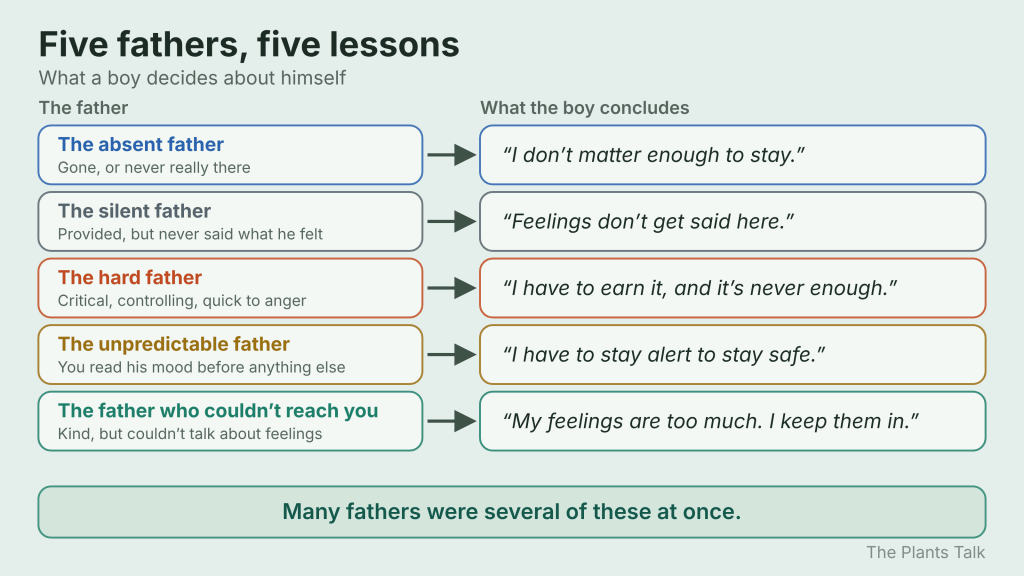
Every father leaves a mark, even the good ones. It tends to fall into a few shapes:
- The absent father. He left, worked all hours, or was never really there, even in the room.
- The silent father. He provided, but you never knew what he felt. Love was shown through practical things, if at all.
- The hard father. He was critical, controlling or quick to anger. Approval had to be earned and was never quite enough.
- The unpredictable father. You read his mood before you read anything else. Walking on eggshells became a skill.
- The father you loved who still couldn’t reach you. He was kind, but couldn’t talk about feelings, so you learned not to bring yours to the table.
You may recognise more than one. Your father may have been several at once, and he won’t fit neatly into any single box.
What’s underneath: the father wound
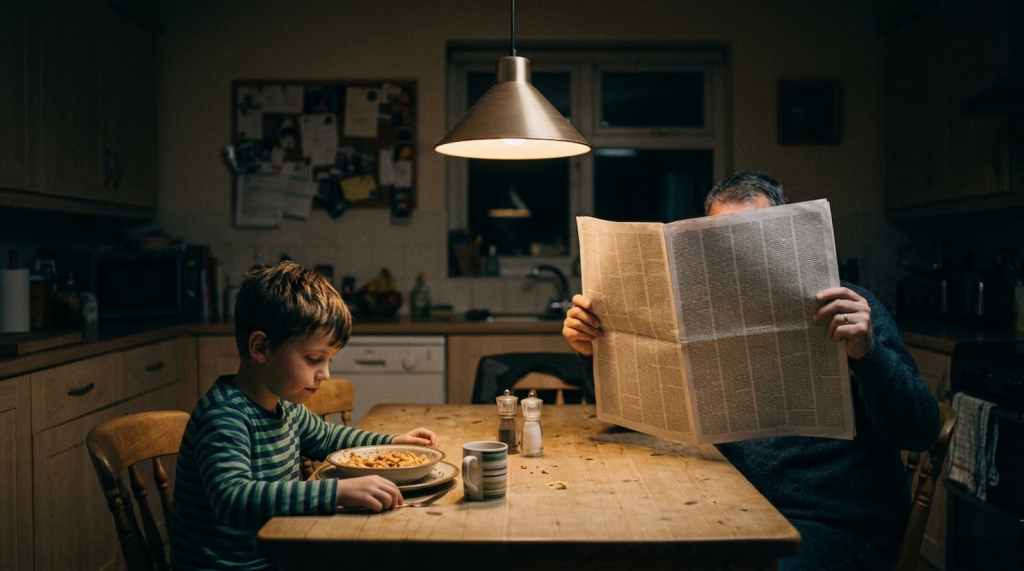
A boy doesn’t conclude “my father was struggling.” He concludes something about himself: there’s something wrong with me. I have to earn it. I have to be useful to be wanted. I have to please people to be seen and valued.
That conclusion goes in early, long before there are words for it. It becomes a quiet rule you live by, often without knowing it exists. Families run on these unspoken rules too: don’t cry, don’t need anyone, don’t talk about it, keep the peace, never show weakness, be strong, be a man. Nobody says them out loud. Everyone follows them.
This is what’s often called the father wound. It isn’t about blame. It’s about what happened between a boy and the man he needed, the man he got, and what the boy decided it meant.
The parts of himself a boy learns to hide to keep his father’s approval don’t disappear. They go into what Jung called the shadow. The shadow and the unconscious looks at where they end up.
Why fathers matter so much
A boy learns what a man is by watching one. For most of us, that man was our father: how he handled anger, whether he cried, how he treated the people he loved, what he did when he failed.
Psychology has long pointed the same way. John Bowlby’s attachment research suggested that a child’s earliest bonds shape how close they can let people get later. Jung wrote about the father complex, the web of feeling and expectation we build around the figure of “father”. The father we carry inside us isn’t quite the man who raised us. It’s a child’s picture of him, and it keeps running.
There’s an older layer too. For most of human history, a boy needed the men of his group to show him how to belong, provide and stay safe, so when that was missing or unpredictable it could feel like a matter of survival. Roots looks at where this comes from. And a child’s nervous system is tuned to the mood of the people it depends on long before it has words for it. Brain looks at how.
How it shows up in adult life
- At work: driving yourself relentlessly, or never feeling you’ve done enough. Clashes with authority, or a need to please it.
- With anger: a temper that arrives faster than the situation deserves, sometimes sounding exactly like him.
- In friendships: plenty of company, few people who really know you.
- In relationships: pulling away when it gets close, or gripping too hard. Choosing partners who feel strangely familiar.
- In how you see yourself: a harsh inner voice that isn’t yours. See Identity.
- In the body: a tightening, a held breath, a stomach that drops when his name appears on your phone. See Emotions and the body.
Where he got it from
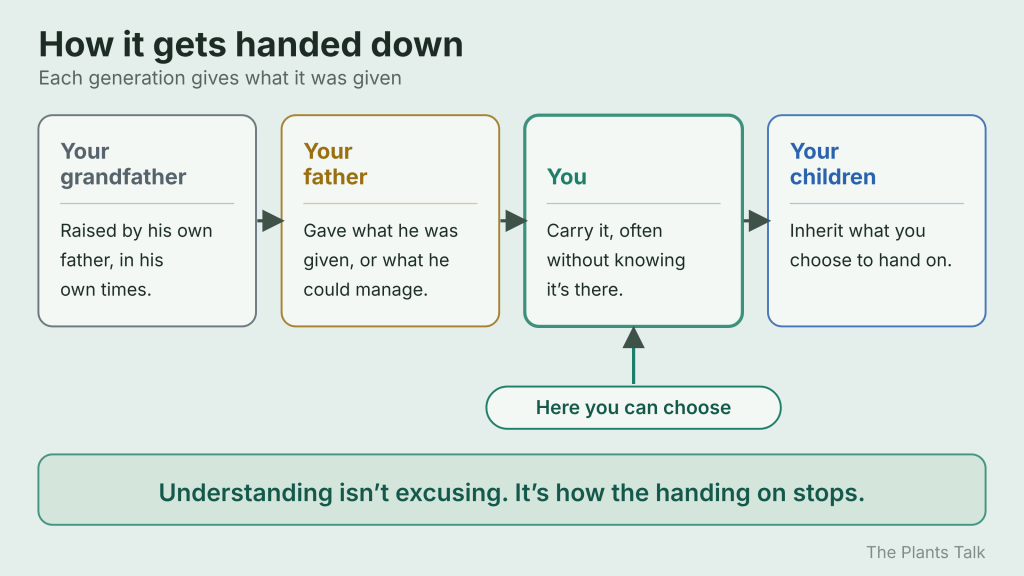
Your father had a father too. Many of the men who raised us were raised by men shaped by war, hardship, migration, poverty or a culture that treated feelings as weakness. Often he gave what he was given, or what he could manage with what he had.
That doesn’t make it hurt less, and it isn’t an excuse. But it can change the story from “he didn’t love me” to “he couldn’t reach me”, and those are different wounds.
In many cultures a father’s duty and provision are how love is shown, and the silence around feelings is shared by the whole family. Identity looks at how family and culture hand down who we’re supposed to be. The thread can run back further than any one man. Trauma looks at how.
When you become a father
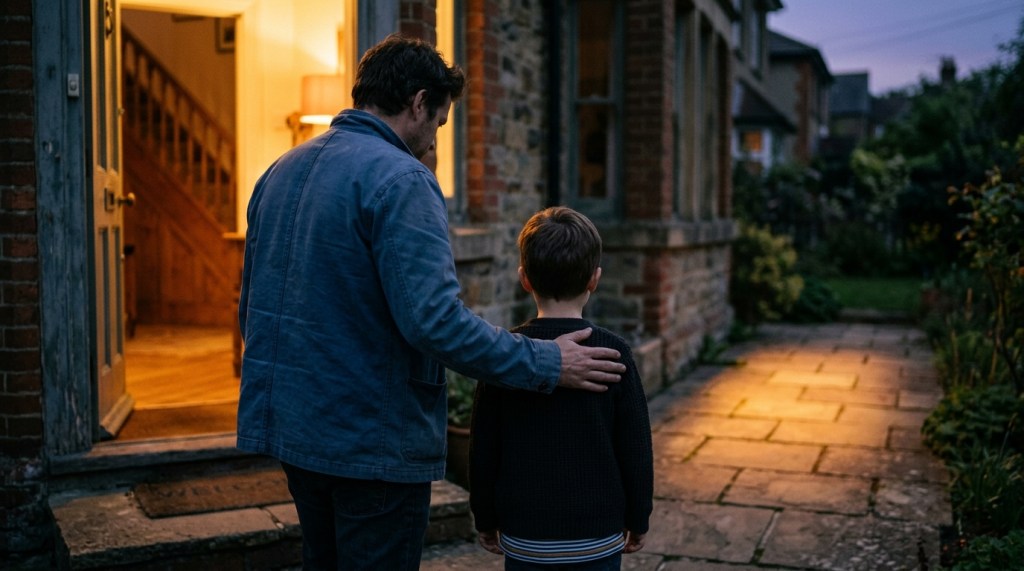
For many men, this is where it surfaces. You hear his words coming out of your mouth. You feel a flash of his temper. You notice yourself going quiet in the way he did.
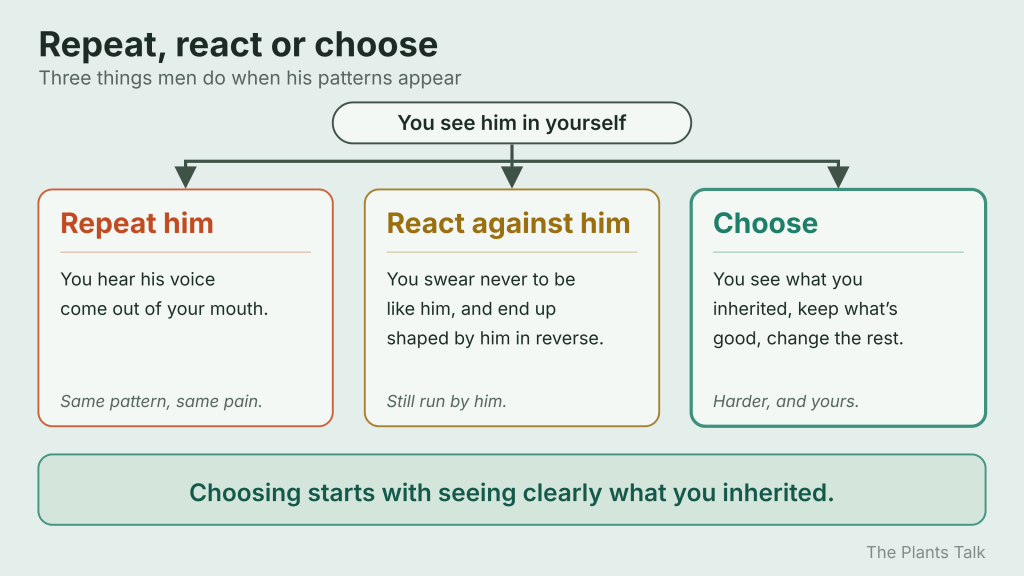
Broadly, men do one of three things. Some repeat him. Some react against him, swearing never to be like him, and end up shaped by him anyway, just in reverse. And some, with time and effort, choose. Choosing is harder than either of the others, because it means first seeing clearly what you inherited.
What you can give instead
You don’t have to be a perfect father. The psychoanalyst Donald Winnicott argued that what a child needs is not a perfect parent but a good enough one. They need someone who’s there, who reads them accurately and who repairs things when he gets it wrong.
- Be there. In body and attention. Phone down, eye contact, time that isn’t about fixing anything.
- Name feelings. Yours and theirs: “I’m cross, and it’s not your fault.”
- Say it out loud. “I’m proud of you.” “I love you.” The words he may never have said.
- Repair. When you lose your temper, go back. “I got that wrong. I’m sorry.” It teaches more than never getting it wrong.
- Let them see you feel. Not a flood, just honest feelings, said calmly.
- Keep your own work going. A man who looks after his own wounds is less likely to hand them on. See Emotions and the body and The shadow and the unconscious.
Breaking the pattern

There’s no quick fix, but there’s a direction:
- Noticing. Catching the moment it happens: the tone, the withdrawal, the reaction that’s too big.
- Naming. Putting words to what you were given and what you weren’t.
- Grieving. Allowing that something was missing. This is the step most men skip, and the one that tends to loosen the rest.
- Seeing him as a person. He had a father too. Understanding isn’t excusing, but it can end the war in your head.
- Choosing differently. In small, ordinary moments, repeatedly. Without making an enemy of the past.
Common questions
What is the father wound?
The lasting effect of a father’s absence, coldness, harshness or unpredictability on a boy’s sense of himself and his place in the world.
What if my dad was around and was a decent man?
Presence isn’t the same as connection. Many men had a father who was home every night and still unreachable.
Is it only about fathers?
No. Mothers and other caregivers matter just as much, and this section looks at those threads too. Fathers are often where the thread starts.
Can this really be passed down?
I believe so. Patterns are handed on through behavior, silence and the stories families tell, and possibly through biology as well. Trauma explores this in more depth.
How do I know if I’m repeating it?
Look at the moments you react most strongly, and ask whose reaction it really is.
What if my father was abusive?
Then what happened wasn’t your fault, and you don’t owe him closeness, forgiveness or contact. This page isn’t about excusing him. [Trauma] looks at this more closely.
What if my father has died, or I never knew him?
The wound is still real. The relationship carries on inside you, and so does the work. Many men do their deepest grieving after a father has gone.
Do I have to forgive him?
No. Understanding him and forgiving him aren’t the same thing, and forgiveness can’t be hurried. Some men get there and some don’t. The work still helps.
Should I talk to him about it?
Only if it feels safe and you’re clear what you want from it. He may not be able to give you what you need. Some men find it better to say it out loud somewhere else first, then decide.
Does seeing his patterns in me make me a bad father?
No. Seeing it is the first step in choosing differently.
Connected to
Trauma · Identity · The shadow and the unconscious · Emotions and the body · Relationships and intimacy · Roots · Brain
Read more
New writing on fathers and family lands here first. Join the list, or if you’d rather talk, book a free intro call.
If anything here brings up difficult feelings, you don’t have to carry them alone. If you’re in crisis or thinking of harming yourself, please contact your local emergency services or a crisis line. You can find one for your country at findahelpline.com.
